

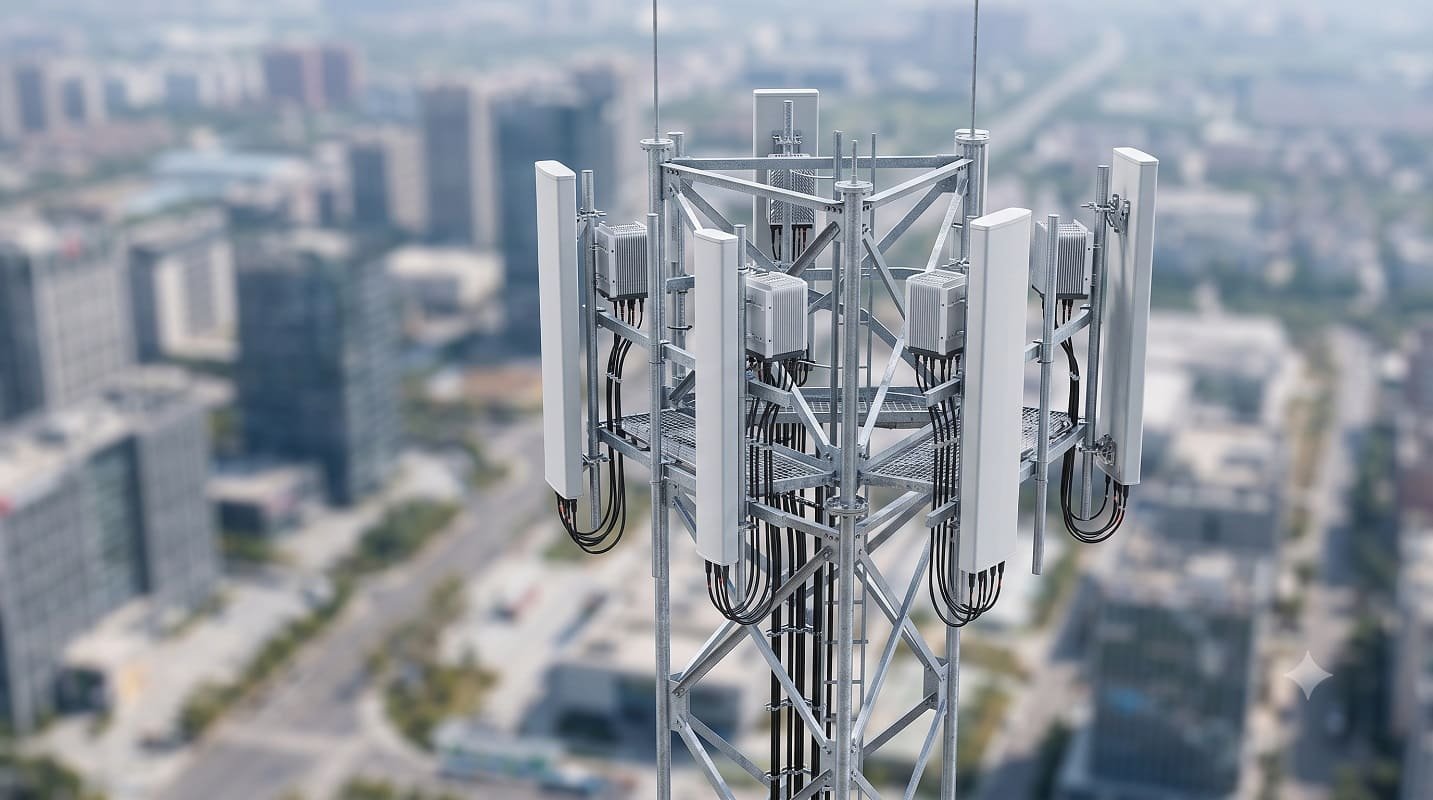
Vodafone Idea (Vi) is recalibrating its capital allocation approach as it prepares to execute a massive network turnaround. According to industry reports citing CNBC-AWAAZ, the operator is unlikely to renew 39.5 MHz of spectrum across the 900 MHz and 1800 MHz bands in six telecom circles when their 20-year administrative licenses expire on December 5, 2026. The proactive Vodafone Idea spectrum strategy indicates a clear pivot away from hoarding expensive spectrum blocks toward deploying dense tower infrastructure and fiber backhaul.
Avoiding Rs. 6,000 Crore in Renewal Fees to Reinvest in Towers
The airwaves in question were originally allotted without an auction to Aditya Birla Telecom in 2006. Under current regulatory norms enforced by the Department of Telecommunications (DoT), renewing these holdings at prescribed base auction prices would have required an estimated outlay between Rs. 5,500 crore and Rs. 6,000 crore.
Rather than committing a massive chunk of its capital reserve to legacy spectrum renewals, Vi has reportedly notified the DoT of its decision to let the specific 900 MHz and 1800 MHz allotments lapse.
| Circle Name | Spectrum Band | Original Allotment Year | Expiration Date | Financial Impact of Non-Renewal |
| Mumbai | 900 MHz / 1800 MHz | 2006 (Aditya Birla Telecom) | December 5, 2026 | ~Rs. 5,500 Cr – Rs. 6,000 Cr Saved |
| Bihar | 900 MHz / 1800 MHz | 2006 (Aditya Birla Telecom) | December 5, 2026 | Reallocated to Capex |
| Odisha | 900 MHz / 1800 MHz | 2006 (Aditya Birla Telecom) | December 5, 2026 | Reallocated to Capex |
| Assam | 900 MHz / 1800 MHz | 2006 (Aditya Birla Telecom) | December 5, 2026 | Reallocated to Capex |
| Jammu & Kashmir | 900 MHz / 1800 MHz | 2006 (Aditya Birla Telecom) | December 5, 2026 | Reallocated to Capex |
By opting out of these renewals, the operator can channel significant capital directly into its multi-year Rs. 45,000 crore capital expenditure roadmap outlined in its June 2026 investor presentation.
Balancing Infrastructure Densification Against Raw Spectrum Quantity
In modern mobile telecommunications, holding vast quantities of spectrum does not automatically translate to superior service quality. Network performance is determined by a combination of base station density, modern radio hardware, fiberized backhaul capacity, and intelligent spectrum refarming.
Having added over 70,000 broadband sites during FY26 to reach a total broadband site count of 566,376, Vi is proving that physical tower densification yields better coverage gains. The company currently covers approximately 86% of India’s population and plans to deploy an additional 60,000 to 70,000 cell sites over the next 12 to 18 months to bring 125 million more citizens under its 4G and 5G footprint.
Operational Focus on 17 Priority Revenue Circles
A key element of the current Vodafone Idea spectrum strategy involves concentrated resource allocation. Rather than spreading capital uniformly across all 22 licensed service areas, Vi is prioritizing 17 key circles that account for approximately 99% of its total revenue.
This targeted approach ensures that major commercial hubs and high-ARPU urban markets receive maximum 5G densification and 4G capacity upgrades. In secondary markets, network optimization relies on refarming existing mid-band spectrum to maintain service quality without expanding capital commitments unnecessarily.
Expert Analysis: Calculating Risks and Network Refarming Capabilities
Industry Context: Releasing 900 MHz airwaves carries potential coverage trade-offs, as sub-GHz bands excel at indoor penetration. However, if Vi holds sufficient contiguous spectrum in other bands within markets like Mumbai and Bihar, refarming existing spectrum alongside adding small cells can mitigate signal degradation effectively.
While Mumbai represents a vital revenue market for Vi, telecom engineers can optimize remaining 1800 MHz and 2100 MHz allocations using advanced Massive MIMO technology. Success will depend on whether Vi’s network operations team can complete site additions before the December 5 expiration date without triggering capacity bottlenecks.
What This Means For Mobile Subscribers
For existing Vodafone Idea customers in affected telecom circles, the strategic shift brings specific practical implications:
- Uninterrupted Service Continuity: Industry reports confirm that subscribers are unlikely to experience service disruptions during the transition period.
- Accelerated 5G Expansion: Diverting funds away from spectrum license fees allows Vi to roll out 5G coverage faster in major metro areas.
- Improved Indoor Signal Density: Capital saved on renewals will fund thousands of new indoor small cells and micro-towers in dense commercial sectors.
The evolving Vodafone Idea spectrum strategy marks a pragmatic shift toward capital efficiency. By prioritizing physical coverage, site density, and 5G deployment over retaining every legacy spectrum block, Vi is taking calculated steps to stretch its Rs. 45,000 crore capex program and build a more resilient network infrastructure for its subscribers.
