

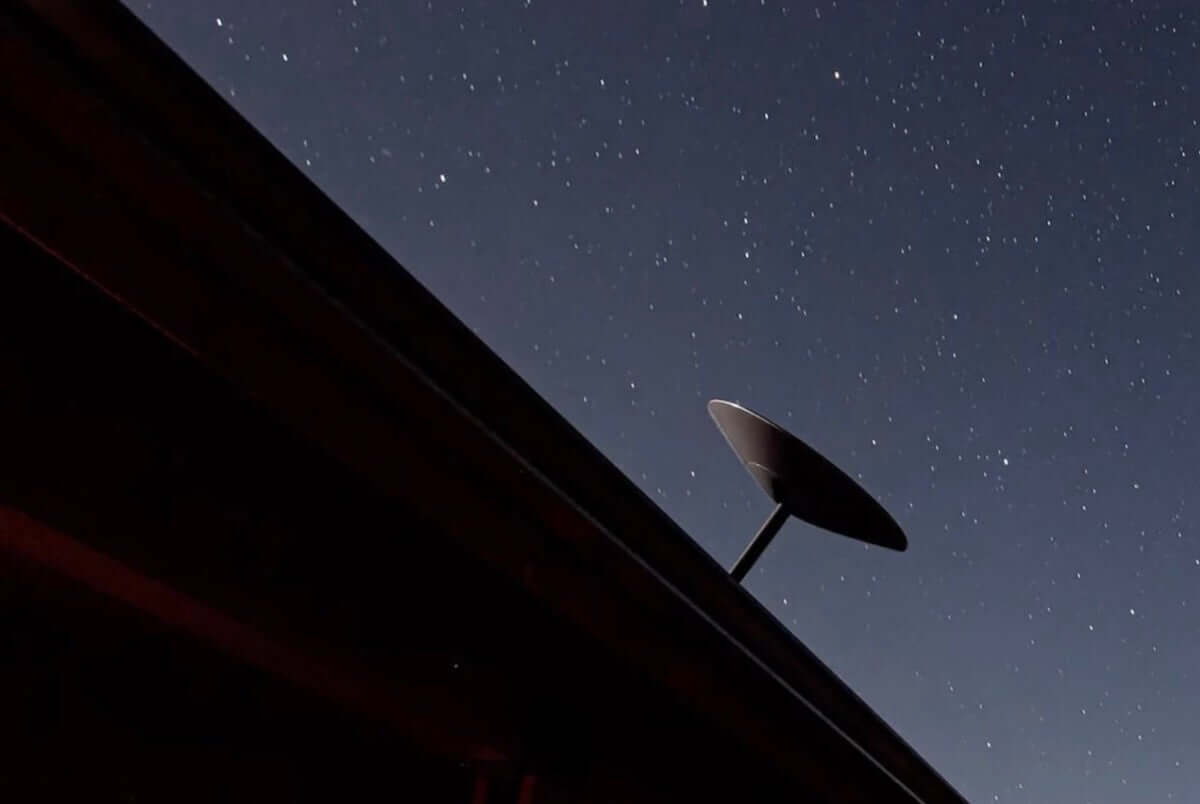
SpaceX-owned Starlink has reportedly reapplied for approval of its Gen 2 satellite constellation in India, including direct-to-device connectivity.
SpaceX-owned Starlink has reportedly submitted a fresh application to India’s space regulator seeking approval for its second-generation (Gen 2) satellite constellation, marking another step in the company’s efforts to begin satellite communication services in the country.
The reported application covers a Gen 2 constellation of nearly 30,000 low Earth orbit (LEO) satellites and includes direct-to-device (D2D) connectivity capabilities, according to The Economic Times. Reuters also reported the development but said it could not independently verify the details of the application.
The reported development comes more than a year after the Indian National Space Promotion and Authorisation Centre (IN-SPACe) approved Starlink’s Gen 1 satellite constellation capacity for India.
Starlink Seeks Approval for Gen 2 Constellation
According to the ET report, Starlink has reapplied to IN-SPACe for authorisation of its Gen 2 constellation, which is planned to operate at altitudes between 340 km and 615 km in LEO. The newer constellation is also designed to support D2D connectivity, potentially allowing compatible devices to communicate with satellites without relying entirely on conventional terrestrial infrastructure.
The application is significant because Starlink’s earlier Gen 2 proposal reportedly faced regulatory hurdles in India. Business Today reported that the previous application was rejected over technical features and spectrum-band requirements, while the Gen 1 constellation was approved in July 2025.
However, the fresh Gen 2 application should not be treated as an approval. The current development is based on media reports about the submission, and IN-SPACe has not been cited as publicly confirming the latest application.
Gen 1 Starlink Constellation Already Received IN-SPACe Approval
India gave Starlink an important regulatory clearance in July 2025.
According to the Government of India’s Press Information Bureau, IN-SPACe approved Starlink’s Gen 1 satellite constellation capacity for provisioning services in India for five years on July 8, 2025. The approval was aimed at supporting connectivity in underserved areas, low-latency applications, IoT and cellular backhaul.
Starlink also holds a GMPCS authorisation in India. The Department of Telecommunications lists Starlink Satellite Communication Private Limited alongside Jio Satellite Communications and OneWeb India Communications among companies holding GMPCS service authorisation.
This means the reported Gen 2 application is an additional satellite-system approval requirement rather than Starlink’s first regulatory interaction with India’s telecom and space authorities.
D2D Could Expand Starlink Beyond Satellite Terminals
The most notable aspect of the reported Gen 2 proposal is its D2D capability.
Traditional satellite broadband generally requires specialised equipment installed at the customer’s location to establish communication with the satellite network. D2D technology takes a different approach by allowing compatible mobile devices to communicate directly with satellites.
For India, the technology could be particularly useful in remote and underserved regions where conventional mobile towers and fibre infrastructure are difficult or expensive to deploy.
It could also complement terrestrial networks rather than simply compete with them. Satellite connectivity can potentially provide coverage in areas where a mobile operator’s terrestrial network has limited reach.
The exact services Starlink could offer through D2D in India would depend on the approvals, spectrum arrangements, technical conditions and other regulatory requirements eventually applicable to the service.
Starlink Still Needs Spectrum Assignment
A key point for consumers is that satellite-system approval and telecom service readiness are separate matters.
The Department of Telecommunications explicitly states that a GMPCS authorisation does not itself provide the right to use satellite spectrum. A separate frequency assignment is required from the Wireless Planning and Coordination (WPC) Wing of DoT.
India’s satellite communications framework is moving towards administrative spectrum assignment. The government has previously stated that the SATCOM policy framework is in place and that spectrum is to be assigned administratively.
Therefore, even if Starlink receives approval for its Gen 2 constellation, that alone would not mean consumers can immediately start using Starlink’s D2D or satellite broadband services across India.
Starlink Faces Competition From Jio and OneWeb
Starlink is entering a market where other satellite operators have already secured important regulatory approvals.
DoT’s GMPCS framework lists Jio Satellite Communications, OneWeb India Communications and Starlink Satellite Communication among authorised entities. The framework permits satellite-based services including voice, messaging, internet connectivity and satellite-based data connectivity for IoT applications, subject to the applicable conditions.
This creates the possibility of a competitive Indian satcom market involving Starlink, Jio and OneWeb, although the commercial launch timeline for each operator remains dependent on the remaining regulatory and spectrum requirements.
What Starlink Gen 2 Approval Could Mean for India
If Starlink’s reported Gen 2 application receives regulatory clearance and the company subsequently secures the necessary spectrum assignment and other permissions, the newer constellation could give it a broader technology proposition in India.
The addition of D2D capability could be particularly important because it potentially moves satellite connectivity closer to the conventional mobile-phone experience.
For now, however, Starlink’s latest move should be viewed as a fresh regulatory application rather than a commercial launch announcement. The next important developments will be IN-SPACe’s decision on the Gen 2 constellation and the regulatory framework governing spectrum and D2D satellite services in India.
