

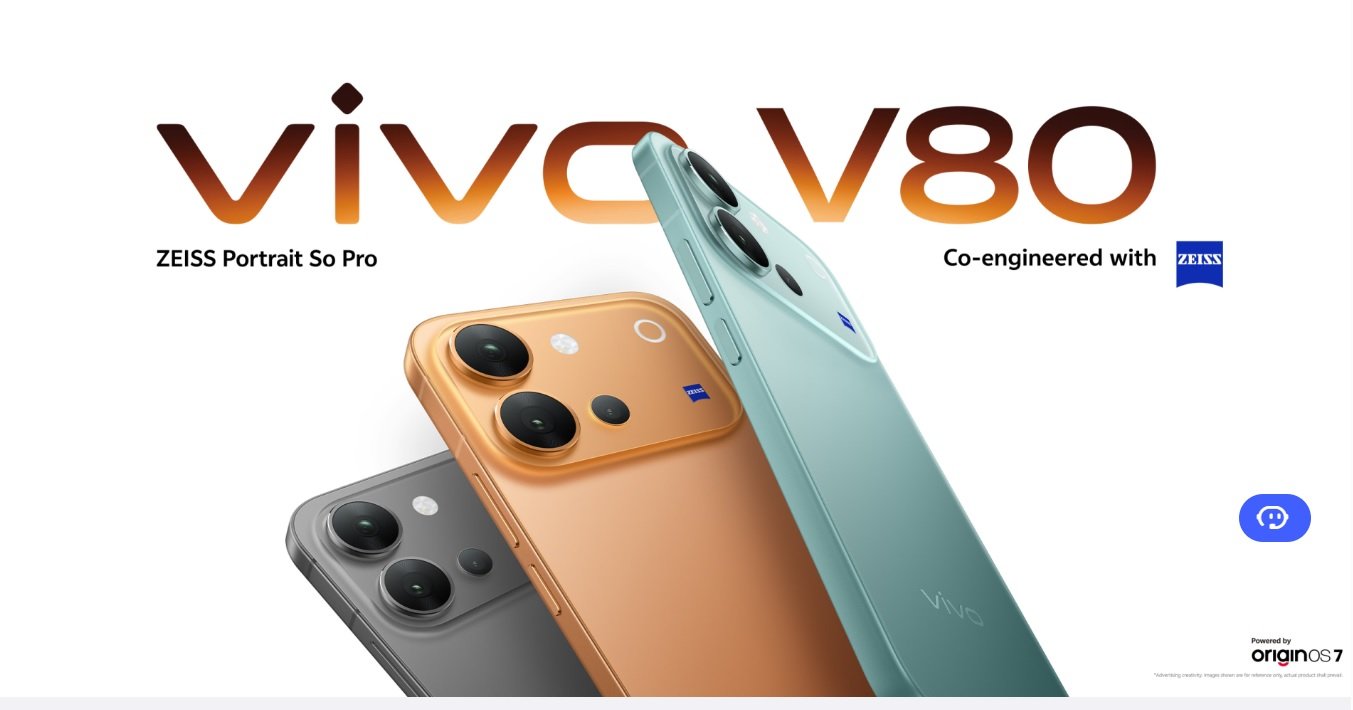
The Vivo V80 has officially launched in India with a combination of a 7,200mAh battery, 144Hz AMOLED display, Snapdragon 7 Gen 4 processor and Zeiss-branded cameras. The new V-series smartphone also becomes one of Vivo’s early India models to run Android 17-based OriginOS 7, giving the phone a notable software upgrade alongside its hardware improvements.
Vivo V80 India Price and Availability
Vivo has launched the V80 in India as part of its latest premium V-series lineup. The company is targeting buyers who want a combination of camera performance, long battery life and a high-refresh-rate display.
The final India pricing and availability are part of today’s launch announcement, with sales expected through Vivo’s online store and authorised retail channels.
The V80’s positioning will put it directly against smartphones from OnePlus, Samsung, Oppo and other brands competing in India’s upper mid-range and premium smartphone segments.
Vivo V80 Specifications
The Vivo V80 features a 6.59-inch AMOLED display with a 144Hz refresh rate. The higher refresh rate is designed to make scrolling, animations and supported games appear smoother than on conventional 60Hz or 120Hz panels.
The display is one of the key hardware features of the V80, particularly for users who consume a lot of video content or play games on their smartphones.
Powering the phone is Qualcomm’s Snapdragon 7 Gen 4 chipset. The processor is aimed at the upper mid-range segment and is paired with Vivo’s software and performance optimisations.
The biggest hardware highlight, however, is the battery.
Vivo V80 Gets a 7,200mAh Battery
The Vivo V80 packs a 7,200mAh battery, which is considerably larger than what is found on many smartphones in its segment.
Vivo is pairing the large battery with support for 90W fast charging. The combination is intended to address two common concerns for smartphone users: battery endurance and the time required to recharge a large battery.
For users who spend long hours watching videos, gaming, using navigation or relying on mobile data, the larger battery could be one of the V80’s biggest advantages.
The battery capacity also gives Vivo a strong talking point in the increasingly competitive premium smartphone market, where manufacturers are trying to increase endurance without moving to much thicker designs.
Zeiss Cameras Take Centre Stage
Camera performance remains a major part of the V-series proposition, and the Vivo V80 continues Vivo’s partnership with Zeiss.
The phone features a triple rear-camera system co-developed with Zeiss. The setup is designed to target photography and portrait users, with Vivo placing particular emphasis on image quality and camera processing.
The V-series has traditionally focused heavily on portrait photography, and the V80 continues that strategy while combining the camera hardware with the company’s latest image-processing features.
The exact camera specifications and capabilities should therefore be considered alongside Vivo’s software processing rather than judged purely by megapixel numbers.
Vivo V80 Runs Android 17-Based OriginOS 7
One of the more interesting changes with the Vivo V80 is the software.
The smartphone runs Android 17 with Vivo’s OriginOS 7 interface. This makes the software experience an important part of the V80’s India launch rather than simply another hardware refresh.
OriginOS brings Vivo’s own interface design, system features and customisation options on top of Android. The latest version is also expected to bring improvements to system performance, multitasking and connected-device functionality.
For Indian buyers, the arrival of OriginOS 7 is particularly notable because Vivo previously used Funtouch OS on its India smartphones. The move gives the V80 a different software identity compared with many of Vivo’s earlier India models.
Vivo V80 Targets Premium Smartphone Buyers
The V80 is positioned around three major selling points: cameras, battery life and display quality.
The 7,200mAh battery gives it an obvious endurance advantage on paper, while the 144Hz AMOLED panel targets users who want a smoother display experience. The Zeiss camera partnership is aimed at buyers who prioritise photography and portraits.
The Snapdragon 7 Gen 4 sits between mainstream and flagship Snapdragon platforms, making the overall package more focused on balancing performance with battery efficiency rather than competing directly with the most expensive flagship processors.
Is the Vivo V80 Worth Considering?
The Vivo V80 has a particularly interesting hardware combination for buyers who do not want to compromise on battery capacity while still looking for a premium display and camera experience.
Its 7,200mAh battery is likely to be one of the strongest reasons to consider the phone, especially for heavy users. The 144Hz AMOLED display and 90W charging add to that proposition, while the Zeiss camera system gives Vivo another differentiating feature.
The software is equally important. With Android 17-based OriginOS 7, Vivo is giving the V80 a newer software experience alongside its hardware upgrades.
However, the final value proposition will depend heavily on the India price and the offers available at launch. At this price level, the V80 will face strong competition from OnePlus, Samsung, Oppo and other premium smartphones.
The Vivo V80 therefore has enough hardware differentiation to stand out, but its success in India will ultimately depend on whether Vivo can price the phone aggressively enough against those alternatives.
