

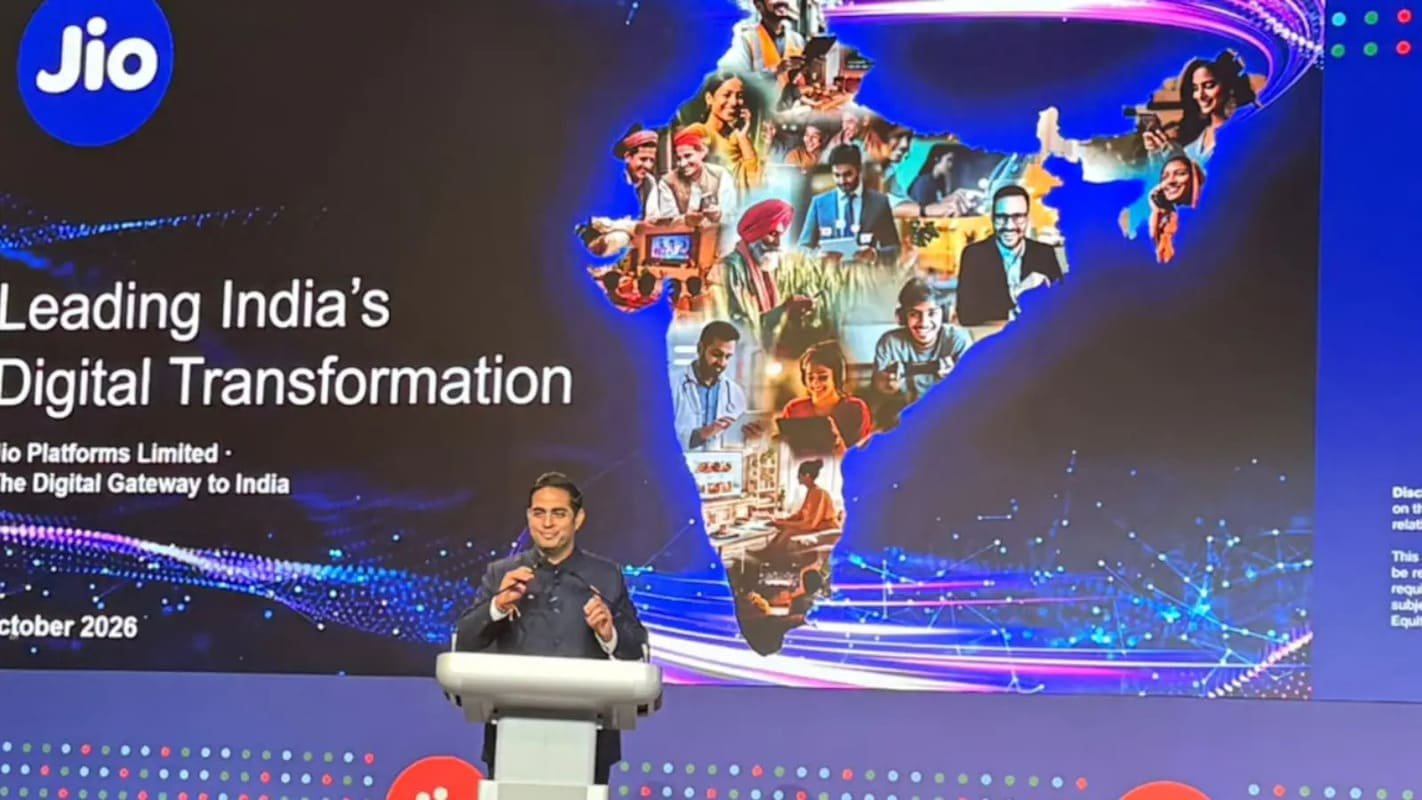
Jio Platforms’ Rs 30,213-crore initial public offering (IPO) was subscribed 5.57 times by the end of the second day of bidding on 22 October 2026, as institutional and retail investor demand continued to build. Qualified institutional buyers (QIBs) led the response, with their reserved portion subscribed 13.29 times, according to subscription figures reported at 7:00 PM IST.
The IPO will remain open for applications until 23 October. Investors who have already applied can track their application and prepare for the allotment announcement, while those considering an application should assess the issue price, valuation and risks rather than relying only on subscription figures or grey-market premiums.
Jio IPO Day 2 Subscription Status
The issue received bids for approximately 110 crore shares against 19.75 crore shares on offer by the end of Day 2. All investor categories were subscribed more than once.
| Investor category | Subscription |
|---|---|
| Qualified institutional buyers (QIBs) | 13.29 times |
| Non-institutional investors (NIIs) | 5.97 times |
| Retail individual investors | 1.54 times |
| Eligible shareholders | 4.04 times |
| Employees | 2.10 times |
| Overall subscription | 5.57 times |
The figures indicate that demand exceeded the shares reserved for each category. Institutional investors accounted for the strongest demand, while the retail portion also received bids above its allocation.
Subscription figures can change during the bidding period. Investors should check the latest exchange data for the final subscription status after the issue closes.
Jio IPO Price, Lot Size and Important Dates
Jio Platforms has set a price band of Rs 1,065 to Rs 1,119 per share. The IPO is a fresh issue of 27 crore equity shares, with no offer-for-sale component from existing shareholders.
| IPO detail | Information |
|---|---|
| Company | Jio Platforms Limited |
| Issue size | Rs 30,213 crore |
| Price band | Rs 1,065–Rs 1,119 per share |
| Lot size | 12 shares |
| Minimum investment at upper price | Rs 13,428 |
| IPO closing date | 23 October 2026 |
| Expected allotment date | 26 October 2026 |
| Expected share credit and refund date | 27 October 2026 |
| Expected listing date | 28 October 2026 |
| Stock exchanges | BSE and NSE |
At the upper end of the price band, one lot of 12 shares costs Rs 13,428, excluding applicable charges. Investors should use the official offer documents for the final terms and check their broker or bank platform for application-specific information.
Why Institutional Investors Are Watching Jio Platforms
Jio Platforms is the digital services business of Reliance Industries, with Reliance Jio Infocomm at the centre of its telecom operations. The company has a large subscriber base and is pursuing growth across mobile connectivity, 5G, home broadband, enterprise services and digital platforms.
Reuters reported that institutional demand was a major driver of the IPO’s subscription on Day 2. The offering is also being watched because of its size and the valuation it places on one of India’s largest telecom and digital businesses.
However, strong institutional demand should not be treated as a guarantee of listing gains. Institutional investors can have different investment horizons, portfolio strategies and risk assessments from individual retail investors.
Jio IPO Grey-Market Premium: Does It Guarantee Listing Gains?
The grey-market premium (GMP) is an unofficial indication of the price at which IPO-related interest may be traded outside the formal stock exchange system. It is not an exchange-published price or a reliable forecast of the actual listing price.
Financial Express reported a GMP of around Rs 240 in its Day 2 coverage. Such indications can change quickly as market conditions, investor sentiment and demand shift.
Even if the GMP suggests a potential premium over the issue price, investors should not assume that the shares will list at that level. Actual listing performance depends on market conditions, demand when trading begins, the company’s valuation and other factors.
GMP figures are not guaranteed returns. Investors should avoid borrowing money or applying beyond their financial capacity based on unofficial market indications.
Already Applied for the Jio IPO? What Happens Next?
Applicants should first confirm that their application was submitted successfully and that the payment mandate or ASBA block was completed. A successful UPI mandate or blocked amount does not mean shares have been allotted.
The expected allotment date is 26 October 2026. Once the basis of allotment is finalised, applicants can check their status through the official registrar or stock exchange website. If shares are allotted, the relevant application amount is debited and shares are credited to the applicant’s demat account according to the issue schedule. If no shares are allotted, the blocked amount is released through the applicable process.
Investors should use official channels to check their application status and avoid relying on unofficial messages claiming to confirm allotment.
Should Investors Apply on the Final Day?
The Day 2 subscription figures show strong demand, but they do not answer whether Jio Platforms is suitable for every investor. Before applying on 23 October, investors should consider the issue price, valuation, financial performance, future capital requirements, competition and the risks disclosed in the prospectus.
Those applying for short-term listing gains should recognise that the listing price may be higher or lower than the issue price. Long-term investors should focus on whether the company can grow revenue and earnings, manage capital expenditure and turn its large customer base into sustainable financial returns.
For applicants who have already placed a bid, the priority is to verify the application and monitor the allotment process. For those still considering an application, the subscription multiple is only one input into the decision—not a substitute for understanding the business and its valuation.
Disclaimer: This article is for informational and educational purposes only and is not investment advice or a recommendation to apply for or avoid the IPO. Investors should read the official offer documents and consult a SEBI-registered investment adviser if they need personalised guidance.
