The Telecom Regulatory Authority of India (TRAI) has officially compiled its technology subscription indices for the month ending May 31, 2026. While the mobile wireless ecosystem remains intensely competitive, the high-margin Fixed Wireless Access (FWA) sector—commercially branded by carriers as “AirFiber” systems—is experiencing an unexpected structural separation.
The financial summaries show that Reliance Jio is rapidly capturing the domestic home broadband footprint. By pairing its standalone 5G network core with specialized spectrum deployment strategies, Jio’s FWA additions have created a massive volume gap over its nearest competitor, Bharti Airtel, whose residential wireless broadband pipeline hit a severe sequential bottleneck during the May tracking loop.
Deep Dive: 5G FWA vs. UBR Wireless Broadband Metrics
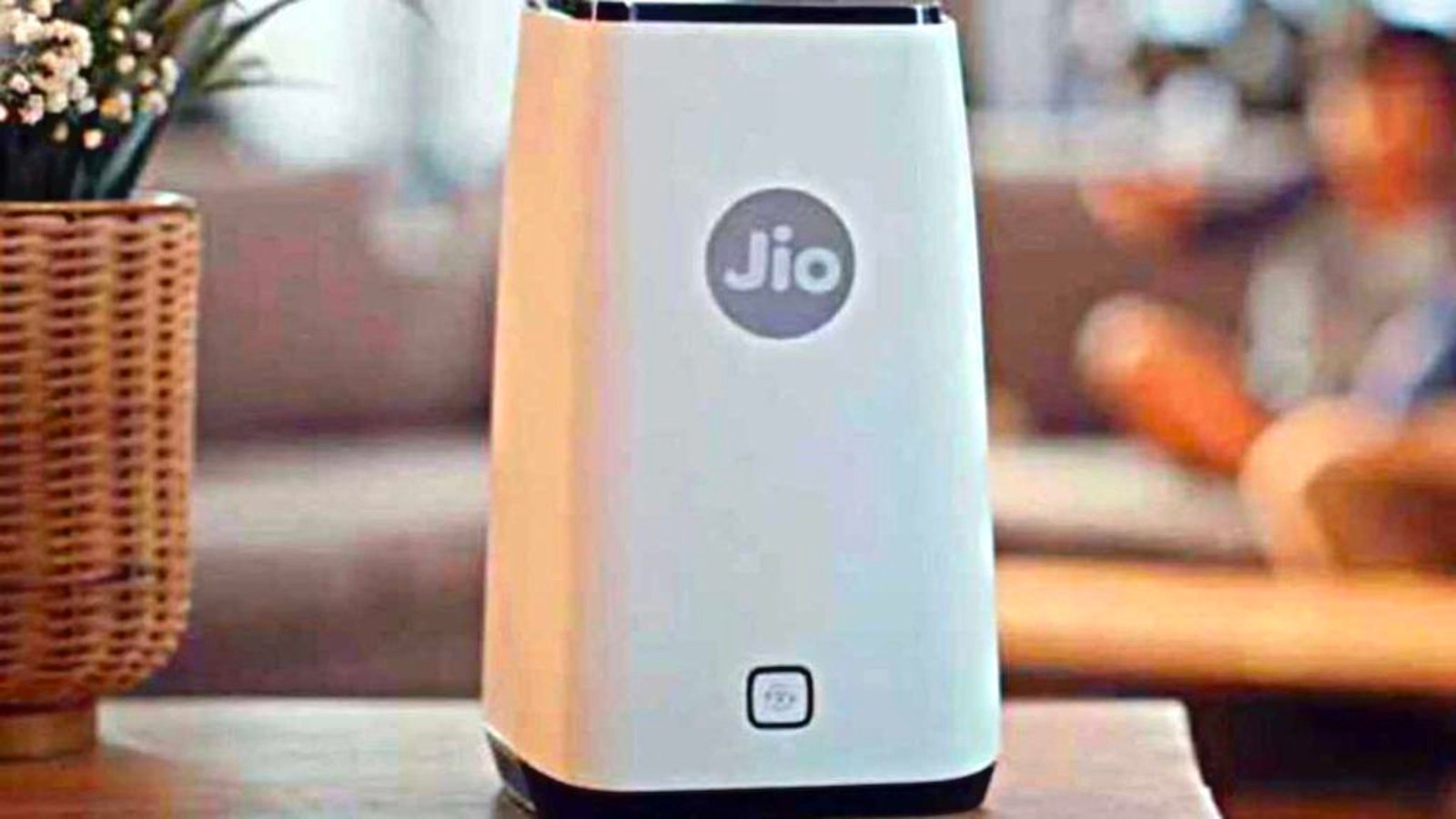
According to the TRAI telecom data May 2026 handbook, the real differentiator driving Jio’s home market dominance is its dual-technology platform layout. While Airtel distributes its commercial AirFiber service strictly across licensed 5G mobile spectrum slices, Jio uses a mix of licensed 5G bands alongside Unlicensed Band Radio (UBR) technology networks to maximize capacity.
By separating its data payloads, Jio can offload dense residential data demands from its standard mobile layers, allowing it to sustain aggressive pricing models across both urban and rural licensing pockets.
| Fixed Wireless Access Segment Parameters | Reliance Jio Infocomm Base | Bharti Airtel Base |
| Active 5G FWA Connections | 8,968,567 lines | 3,764,262 lines |
| Sequential 5G FWA User Additions | +174,817 accounts | +7,773 accounts |
| Monthly Growth Rate | 1.99% expansion | 0.21% expansion |
| Active UBR FWA Connections | 4,732,703 lines | 0 lines (Not Deployed) |
| Sequential UBR FWA Additions | +227,648 accounts | 0 lines |
| Total Combined Home Wireless Base | 13.70 million lines | 3.76 million lines |
Operational Hurdles Behind Airtel’s Growth Deceleration
The sharp divergence in Airtel 5G FWA growth targets reflects different rollout architectures. Equity researchers tracking telecom stocks India 2026 point out that Airtel’s Non-Standalone (NSA) 5G framework shares spectrum infrastructure with active 4G mobile bands.
Because standard smartphone traffic has surged past 26.7 GB per user per month, Airtel must tightly regulate its fixed home broadband provisioning in dense urban neighborhoods to keep from degrading its premium postpaid mobile network quality.
Jio, by contrast, relies on a dedicated Standalone (SA) 5G blueprint backed by ample sub-GHz spectrum and extensive local fiber backhaul loops. This infrastructure layout allows Jio to deploy its customer premises equipment (CPE) at scale without bottlenecking local mobile towers, giving it a distinct speed and availability advantage across mid-tier city circles.
The Catch-Up Threat and Vodafone Idea’s Structural Absence
While the two top carriers split nearly 17.5 million total fixed wireless connections between them, Vodafone Idea (Vi) remains conspicuously missing from the segment. Vi has completed successful initial 5G equipment testing blocks across select metro zones like Pune and Delhi, but its broader commercial launch continues to wait for major capital deployment cycles to clear.
This multi-year delay puts Vi in a difficult position where it will inevitably have to play catch-up. Once an operator mounts an FWA dish on a consumer’s balcony and locks them into an integrated family plan, switching costs become high. As Jio and Airtel capture the premium home market, Vi’s late-stage entry will face diminished customer acquisition options, forcing it to compete on low margins to attract late-stage broadband adopters.
Vodafone Idea Remains Absent
Vodafone Idea has yet to enter the commercial Fixed Wireless Access segment. While the company has conducted limited 5G testing in select circles, large-scale broadband rollout remains pending due to capital constraints.
This delay places Vi at a disadvantage as competitors strengthen early customer lock-in in the home broadband segment.
Market Outlook: India’s FWA Expansion
India’s Fixed Wireless Access market is expected to remain one of the fastest-growing segments in the telecom industry. Rising demand for:
- Home broadband connectivity
- Remote work solutions
- Streaming and gaming services
is accelerating adoption of wireless broadband alternatives.
Jio currently leads this transition, while Airtel continues to balance mobile network load with fixed broadband expansion.
What does TRAI May 2026 data show about FWA in India?
It shows that India’s FWA market has reached 12.73 million users, with Jio leading at nearly 9 million connections.
Why is Jio leading the FWA market?
Jio benefits from a standalone 5G network and UBR-based deployment, allowing faster scaling of home broadband services.
How is Airtel performing in FWA?
Airtel continues to grow, but its FWA expansion is slower due to shared network infrastructure and capacity prioritization.
Is Vodafone Idea offering AirFiber services?
No, Vodafone Idea has not yet launched commercial FWA services as of May 2026.
Conclusion
The latest parameters provided by the Telecom Regulatory Authority of India reveal that the domestic home broadband space is shaping up to be an uneven race. Jio’s rapid expansion toward the 9 million subscriber milestone highlights the competitive power of an asset-rich, Standalone 5G network deployment strategy. While Airtel continues to lead in pure mobile active connections, its flattening FWA growth numbers indicate that spectrum capacity caps may be forcing the company to prioritize network stability over aggressive customer acquisition. With Vodafone Idea on the sidelines and Jio deploying its unique UBR framework at scale, the market leader is cementing a long-term home connectivity advantage that will be difficult for rivals to shake.
For the latest tech news, follow TelecomByte on X, Facebook and Google News.