

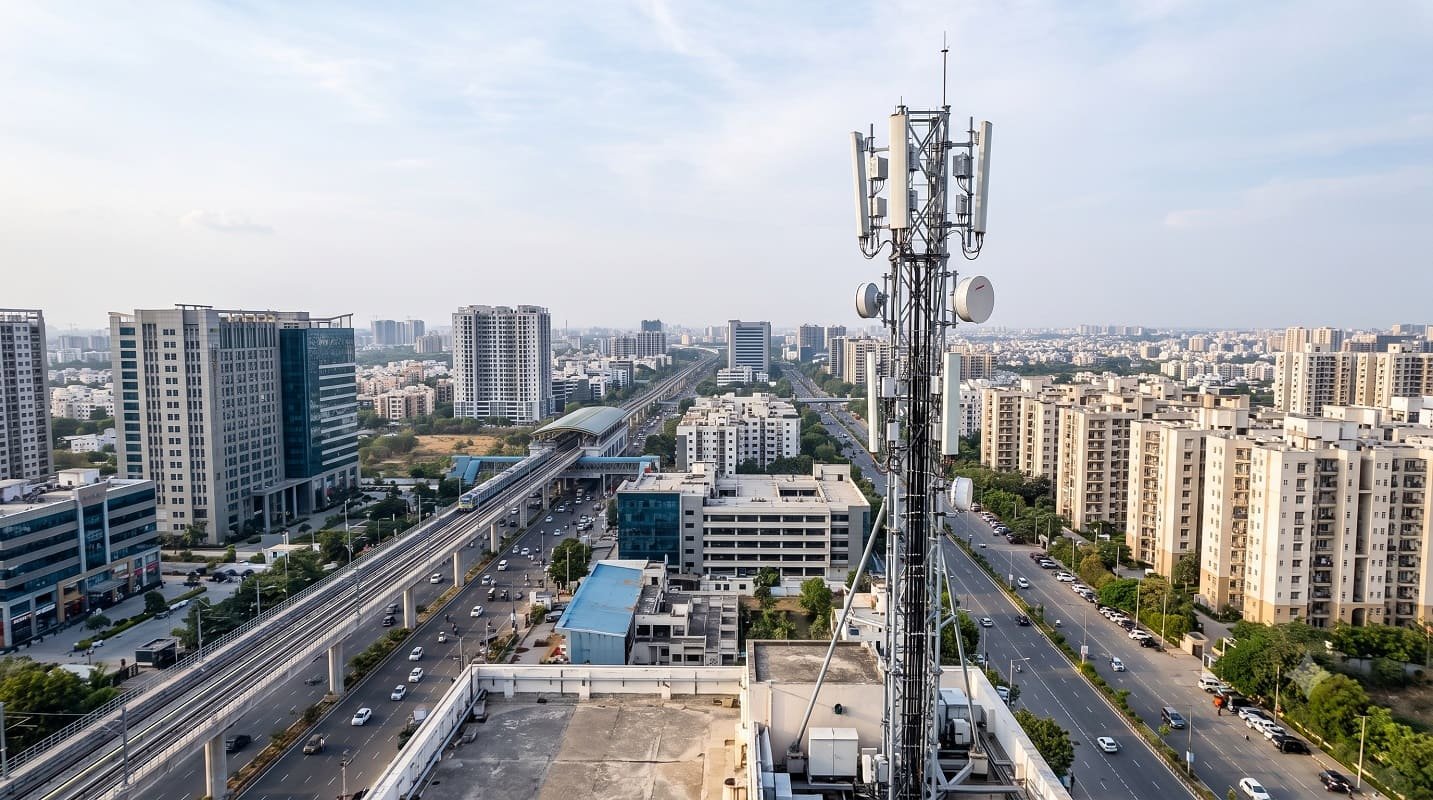
The Ministry of Communications has announced the establishment of a Telecom Manufacturing Zone (TMZ) in Gwalior, Madhya Pradesh, with the government saying the project has attracted more than Rs 5,500 crore in committed investments. The proposed zone is expected to bring telecom manufacturing, research and development, testing and advanced technology capabilities together, with more than 24 companies expected to participate.
Gwalior to Become Telecom Manufacturing Hub
The government announced the Gwalior telecom manufacturing zone on October 6, describing it as Asia’s first Telecom Manufacturing Zone. The project is expected to create a dedicated ecosystem for companies involved in telecom equipment manufacturing and related technologies.
According to the government, more than Rs 5,500 crore in investments have been committed to the project, while the zone could create more than 18,000 employment opportunities.
The bhoomipujan, or foundation ceremony, is scheduled for October 29, 2026. Home Minister Amit Shah is expected to attend the event.
The project is being positioned as part of India’s broader push to strengthen domestic telecom manufacturing and reduce dependence on imported network equipment.
More Than 24 Companies Expected to Participate
The proposed zone is expected to bring more than 24 global companies into a common manufacturing and technology ecosystem.
The government has indicated that the zone will cover more than just assembly or manufacturing. Research and development, product testing and advanced telecom technologies are also expected to form part of the ecosystem.
This could make the project more significant for India’s telecom industry than a conventional manufacturing cluster.
India has already built a large mobile-phone manufacturing ecosystem, with several international smartphone companies and contract manufacturers producing devices domestically. The next challenge is developing a similarly deep supply chain for telecom network equipment.
What Could Be Manufactured in the Zone?
The exact product mix across all participating companies has not yet been publicly detailed. However, the broader objective of the zone is to support telecom manufacturing and technology development.
Depending on the companies and projects eventually established there, the ecosystem could potentially support products used in areas such as radio access networks, optical and transmission equipment, network infrastructure, enterprise connectivity and other telecom technologies.
The final list of companies, their individual investment commitments and the products they plan to manufacture will therefore be important developments to watch after the announcement.
Why the Project Matters for India’s Telecom Industry
India’s telecom networks have expanded rapidly over the past few years, particularly with the nationwide rollout of 5G. That expansion has created substantial demand for network equipment, fibre infrastructure, optical systems, antennas and other components.
A larger domestic manufacturing ecosystem could help Indian operators source more equipment locally while creating opportunities for Indian suppliers to become part of global telecom supply chains.
The project could also strengthen India’s position as a potential export base for telecom equipment if manufacturers operating from the zone eventually serve markets outside the country.
For telecom operators such as Jio, Airtel and BSNL, a stronger domestic equipment ecosystem could eventually mean a broader pool of suppliers and technology partners.
However, the actual impact will depend on the companies that set up facilities, the products manufactured locally and the extent to which those products meet the technical and commercial requirements of major operators.
Rs 5,500 Crore Investment Is the Key Number
The more than Rs 5,500 crore investment commitment is one of the most significant details in the announcement.
It is important to distinguish between committed investment announced for the project and money that has already been deployed. Individual projects can take several years to move from an investment commitment to operational manufacturing capacity.
The same applies to the employment figure. The government says the zone could generate more than 18,000 jobs, but the figure should be viewed as the projected employment potential of the project rather than an immediate hiring number.
As individual companies disclose their plans, the investment and employment numbers should become easier to assess.
What Happens Next?
The October 29 bhoomipujan will be the next major milestone for the Gwalior Telecom Manufacturing Zone.
The more important developments for the telecom industry will come after that, when details emerge about the companies establishing facilities, the products they will manufacture, their individual investment commitments and the timeline for commercial production.
It will also be important to see whether major suppliers to India’s telecom operators become part of the ecosystem and whether companies eventually use Gwalior as an export base.
If the planned investments translate into large-scale production and R&D facilities, the Gwalior zone could become an important part of India’s attempt to move beyond smartphone manufacturing and build a globally competitive telecom equipment industry.
