

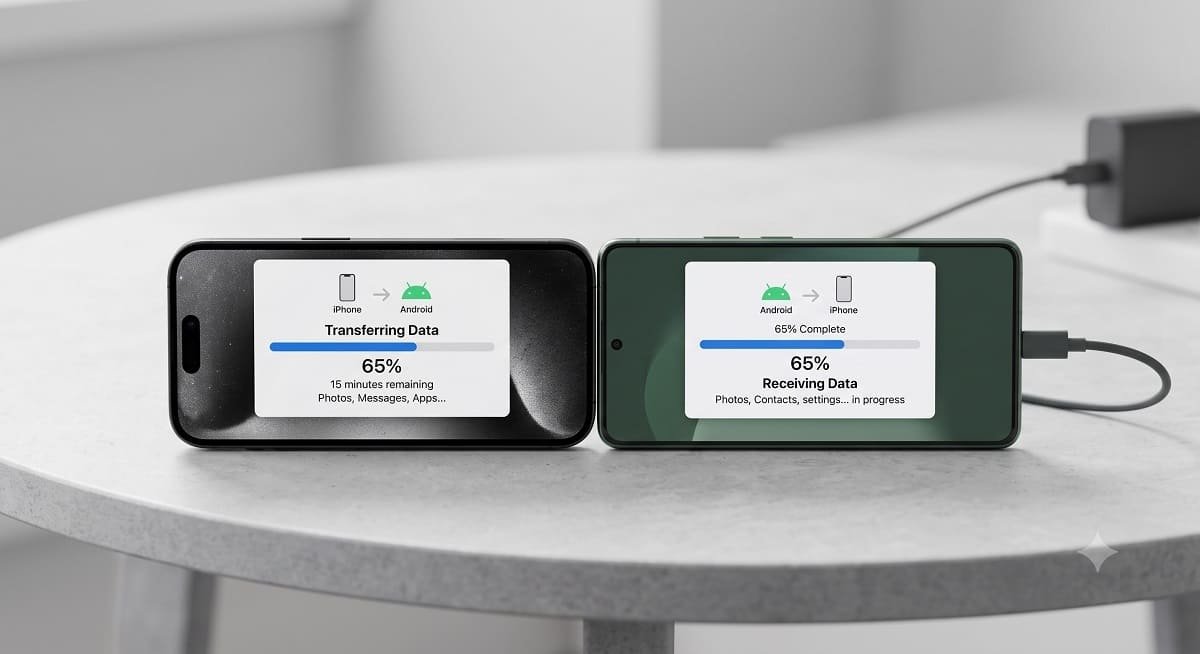
Google has streamlined the process of switching operating systems by embedding an enhanced wireless data transfer tool directly into Android 17. Announced alongside Samsung’s latest Galaxy Z series rollout at Galaxy Unpacked 2026, the update removes long-standing setup hurdles by enabling direct, wireless migration of critical user data from an iPhone to an Android device.
How Android 17 Simplifies the iPhone to Android Migration
Historically, moving from iOS to Android required users to either connect a physical lightning-to-USB-C cable or download dedicated transfer applications from the App Store. While basic files like contacts, call logs, and camera roll media moved over easily, sensitive credentials like saved Wi-Fi networks and passwords often remained trapped within the Apple ecosystem.
Under the updated Android 17 framework, Google has integrated native system protocol level pairing. During the initial setup wizard of a new Android phone, users can initiate a peer-to-peer wireless handshake with their iPhone. The operating system handles encrypted data extraction natively without requiring the user to install temporary migration utilities on their source iPhone.
| Data Category | Previous Transfer Methods | Android 17 Native Wireless Transfer |
| Photos & Videos | Supported via Cable / App | Fully Supported Wirelessly |
| Contacts & Messages | Supported via Cable / App | Fully Supported Wirelessly |
| Wi-Fi Credentials | Manual Re-entry Required | Automatically Migrated |
| Saved Passwords | Manual Export Required | Encrypted Wireless Transfer |
| eSIM Provisioning | Carrier Store / QR Scan | Direct Wireless Transfer |
Broader Data Types Included: eSIM and Credentials Move Wirelessly
The most significant upgrade in Android 17 is its ability to transfer complex credential types that previously demanded manual reconfiguration. The new wireless transfer protocol supports:
- Saved Passwords and Google Accounts: Securely syncs login credentials directly into Google Password Manager during initial boot.
- Network Credentials: Moves saved home and work Wi-Fi network keys so the new device connects automatically upon completing setup.
- eSIM Provisioning: Streamlines digital SIM profile transfers, eliminating the need to obtain new carrier QR codes or call customer support during device activation.
Rollout Timeline for Google Pixel, Samsung Galaxy, and Partner Brands
Google has initiated the software rollout starting with supported Google Pixel hardware running the latest Android 17 builds.
Additionally, the native wireless switching experience comes pre-loaded on Samsung’s newly unveiled foldables—the Galaxy Z Fold 8 and Galaxy Z Flip 8. Google confirmed in an official engineering post that the migration framework will be pushed out to other major Android original equipment manufacturers (OEMs), including Xiaomi, OnePlus, and Motorola, through forthcoming system updates.
Expert Analysis: Lowering Barriers in the Premium Smartphone Market
Industry Context: Platform lock-in has long served as a primary retention tool for premium smartphone brands. By automating the migration of high-friction items like eSIM profiles and Wi-Fi credentials, Google is actively removing the technical friction that deters iOS users from trying alternative hardware form factors.
The ability to migrate seamlessly is particularly crucial for foldable and flip devices. As hardware innovation accelerates in non-traditional form factors, consumers who were previously hesitant to leave the Apple ecosystem due to complex data migration now face fewer technical roadblocks.
What This Means For Mobile Users
For smartphone buyers considering a platform switch, the updated Android 17 system provides several distinct operational advantages:
- No Cable Required: Users no longer need to hunt for specialized adapters or OTG cables during unboxing.
- Zero App Overhead: Eliminates the need to create temporary cloud backups or install third-party migration tools on the source iPhone.
- Immediate Network Connectivity: Automated Wi-Fi key and eSIM transfers mean the new phone is fully operational on cellular and local networks the moment setup completes.
Google’s enhancement of the iPhone to Android data transfer process in Android 17 represents a major win for consumer flexibility. By allowing high-friction elements like eSIMs, Wi-Fi keys, and passwords to move over seamlessly and wirelessly, the operating system effectively removes the technical barriers that have historically locked users into a single mobile ecosystem.
