

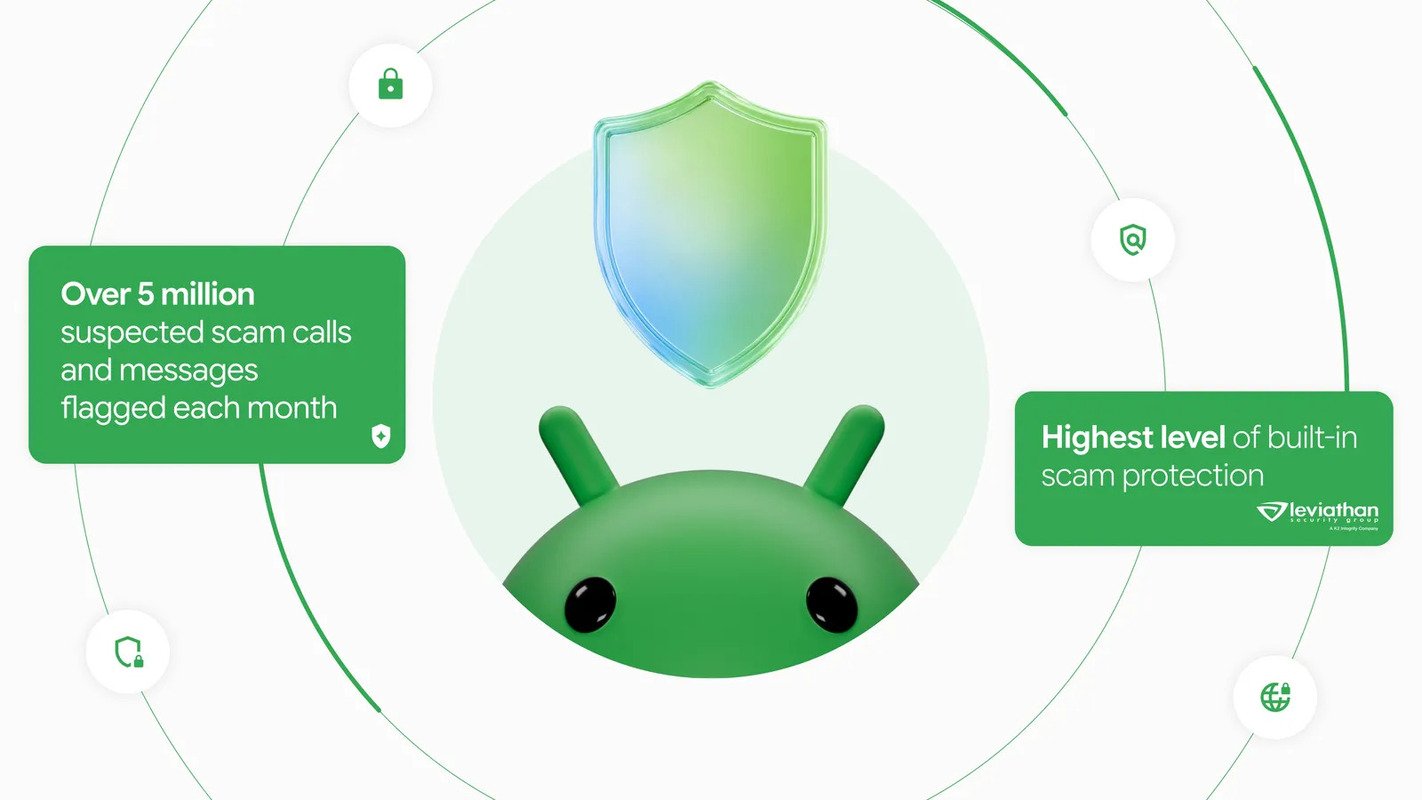
Google is introducing new AI-powered security features for Android phones to help users identify suspicious messages, avoid malicious links and protect themselves from phone-based scams. The update includes enhanced protection in Google Messages, scam alerts across more Android devices and new safeguards against call-forwarding fraud.
Announced on 14 October 2026, the measures combine on-device artificial intelligence with cloud-based processing for selected features. However, availability will depend on the phone model, software version and rollout schedule.
Google Messages Gets Enhanced Protection
One of the key additions is Enhanced Protection mode in Google Messages, designed to identify more sophisticated scams. The feature will build on existing scam detection to help users recognise suspicious conversations, including messages that attempt to manipulate them into sharing personal or financial information.
Google is also strengthening warnings for potentially dangerous links sent by unknown numbers. These alerts are intended to give users an additional opportunity to assess a link before opening it.
The enhanced mode is expected to roll out in the coming weeks, although the exact availability may vary by device and region.
Gemini AI to Check Suspicious Links
Scammers often create websites that imitate banks, delivery companies and other legitimate organisations. Newly created fraudulent websites can be difficult to identify through existing lists of known malicious links.
Google says Gemini Nano will help assess unfamiliar URLs on supported devices, working alongside web-based signals to identify potential threats. The aim is to improve detection of suspicious links before users open them.
The enhanced link-checking capability is intended for selected newer devices, including the Pixel 10 series and certain Samsung Galaxy models. It will not automatically be available on every Android smartphone.
Scam Alerts to Reach More Android Phones
Google is expanding scam alerts beyond Pixel devices through partnerships with Android manufacturers. The feature can warn users about suspicious messages through notifications, helping them recognise potential fraud before opening a messaging app.
Manufacturers involved in the expansion include HONOR, Infinix, iQOO, itel, Motorola, OPPO, OnePlus, realme, TECNO, vivo and Xiaomi.
Google expects the expansion to reach hundreds of millions of additional users later in 2026. However, the timing and availability will depend on individual manufacturers and compatible devices.
Android to Block Call-Forwarding Scams
Another upcoming protection targets fraudsters who try to redirect a victim’s incoming calls to a number they control. Such tactics can help criminals intercept verification calls or gain access to sensitive accounts.
Android will introduce safeguards to prevent apps from silently enabling call forwarding in the background. The system will also warn users if they are tricked into entering a call-forwarding code manually through the phone dialler.
Google says this protection is scheduled to become available from early December on Pixel and selected other devices.
Screen Sharing to Hide Sensitive Information
Screen sharing can expose passwords, payment details and other private information, particularly when a scammer persuades a victim to share their screen during a call.
Android already hides certain sensitive information in supported native apps during screen sharing. Google is extending this protection to Chrome and Android WebView, where login and payment fields can be blanked during a live screen-sharing session.
The feature is rolling out during October to devices running Android 15 or newer, with availability subject to device and software support.
How Google Plans to Protect User Privacy
Google is combining on-device AI with cloud processing for selected scam-detection tasks. Gemini Nano can handle certain checks locally, while more complex analysis can use Google’s cloud-based Gemini models through Private AI Compute.
Google says Private AI Compute uses a secure processing environment designed to keep information inaccessible to others, including Google itself. This is part of the company’s stated approach to providing AI-powered protections without compromising user privacy.
Users should distinguish this automated processing from manually reporting a suspicious message as spam. When a user submits a report, the message and its contents may be sent to Google for analysis.
What the New Features Mean for Android Users in India
The new protections could provide an additional layer of security for Indian smartphone users who receive suspicious messages, fake customer-care links or calls from people impersonating banks and service providers.
However, Google has not confirmed that every feature will launch in India at the same time or on all Android devices. Users should check for software and app updates and look for the relevant settings when the features become available on their phones.
AI-powered detection can help identify suspicious activity, but it cannot catch every scam. Users should continue to avoid opening unexpected links, sharing one-time passwords or banking PINs, and following instructions from callers who pressure them to act immediately.
Google’s update strengthens Android’s existing scam-defence tools, with the practical benefits depending on device compatibility and rollout timing.
