

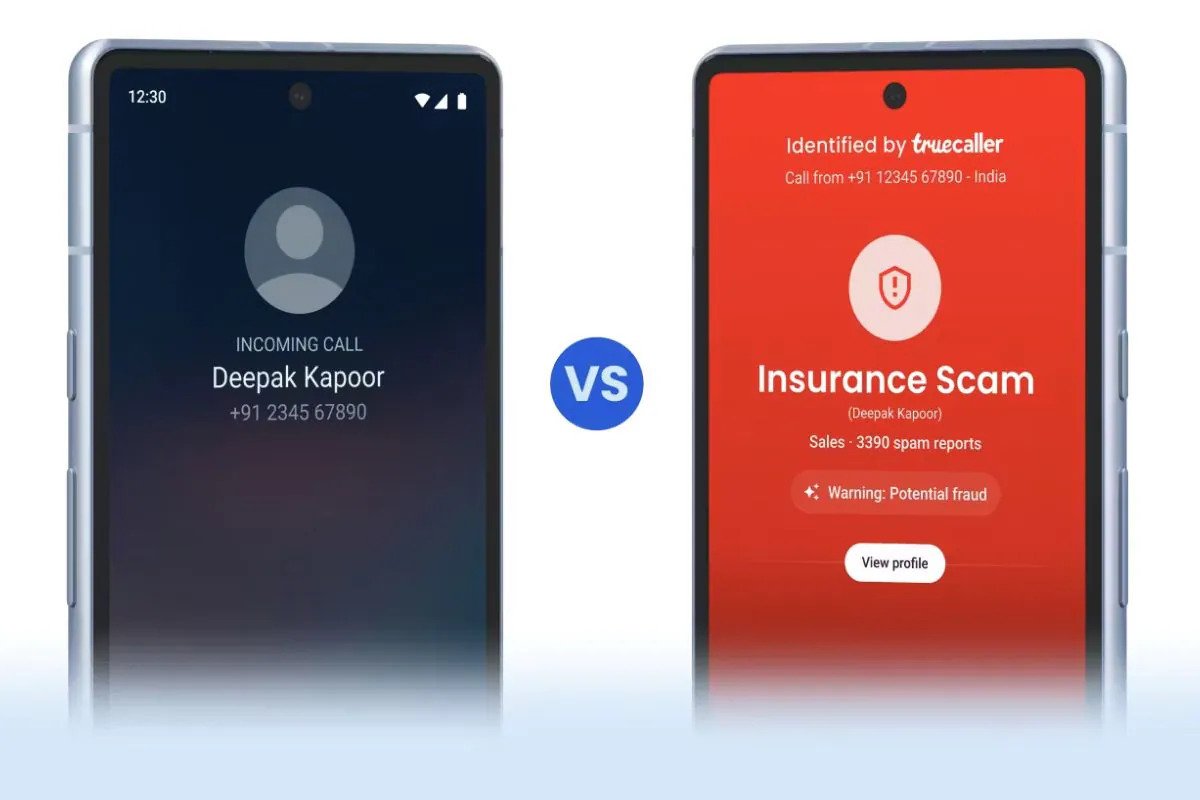
India’s planned Calling Name Presentation (CNAP) rollout could change how mobile users identify unfamiliar callers. From November 1, 2026, telecom operators have been directed to introduce CNAP across their 4G and newer-generation networks, allowing the name recorded in a subscriber’s telecom records to be displayed alongside an incoming number.
This raises a natural question: if a phone can show a caller’s registered name without a separate application, will people still need Truecaller?
The two services serve overlapping but different purposes. CNAP focuses on presenting a name associated with a telecom connection, while Truecaller provides caller identification and additional information, including community-based spam signals.
CNAP vs Truecaller: The Main Difference
CNAP obtains the caller-name identity from telecom operator subscriber records. Truecaller uses its own caller identification systems and databases, including community-contributed information and other signals, to identify numbers and flag potential spam.
| Feature | CNAP | Truecaller |
|---|---|---|
| Main purpose | Display the name associated with a telecom subscriber record | Identify callers and provide additional caller context |
| Source of name | Telecom operator’s subscriber database | Truecaller’s caller identification data and other signals |
| Separate app required | No separate CNAP app is intended | Yes, for Truecaller’s app-based features |
| Internet dependency | Designed as a network service, not an internet-based caller ID app | App features and updates may depend on connectivity |
| Spam identification | A registered name is not itself a spam verdict | Includes spam identification and related features |
| Extra caller information | Primarily caller-name presentation | May include community labels, business information and other features |
The services may therefore complement each other rather than being exact substitutes.
Why CNAP Could Be Useful
One advantage of CNAP is that it is designed to operate through telecom networks. Users do not need to install a separate caller ID app just to receive the name information provided by the service.
The name is associated with the caller’s subscriber record, rather than being based solely on how other app users have labelled a number. This could help users identify unfamiliar domestic callers even if they have never used Truecaller.
However, the displayed name is not necessarily the name by which a person is commonly known. A connection may be registered under a family member’s name, an individual’s legal name or a business’s registered details.
What Truecaller Can Offer Beyond a Name
Caller identification apps can provide context that a subscriber record alone does not supply. Depending on the available features, Truecaller can show community-based spam labels, business information and other caller insights.
For example, CNAP may show the registered name associated with a mobile connection. A caller identification app may additionally flag that the number has been reported for unwanted calls.
Neither result guarantees that a call is safe. A registered name can be genuine while the caller’s request is fraudulent, and spam detection can produce incorrect classifications.
CNAP and Privacy: What Should Users Know?
The DoT’s October 2026 instructions require telecom operators to adopt a security-by-design approach so that the caller-name identity retrieved through the CNAP query-response process is not retained after the call ends. The instructions also state that names of subscribers using the Calling Line Identification Restriction (CLIR) facility will not be presented.
The directive provides for telecom operators to maintain subscriber-name databases and establish a grievance-redressal mechanism for CNAP-related complaints.
These safeguards address how CNAP information is handled by the telecom system. They should not be interpreted as a general statement about how every caller ID application collects, processes or retains data. Users should review each app’s own privacy policy and permissions.
Can CNAP Be Trusted More Than Truecaller?
It depends on what a user wants to establish.
If the question is which name is recorded against a telecom connection, CNAP provides information from the operator’s subscriber records. If the question is whether a number is associated with spam reports or a particular business, a caller identification app may provide additional context.
Neither service independently verifies the purpose of a call or guarantees the identity of the person speaking. Caller ID spoofing and misleading claims remain risks, so users should never share OTPs, banking credentials or passwords simply because a familiar name appears on the screen.
Should You Uninstall Truecaller After CNAP Arrives?
Not necessarily. People who use Truecaller only to see a name for an unfamiliar number may find CNAP useful for that basic purpose. Users who rely on spam warnings, call blocking or other app features may still find value in a separate caller identification service.
The most important distinction is simple: CNAP is designed to show the name associated with a telecom record, while Truecaller aims to provide broader caller identification and context. Neither should replace basic precautions when handling suspicious calls.
