

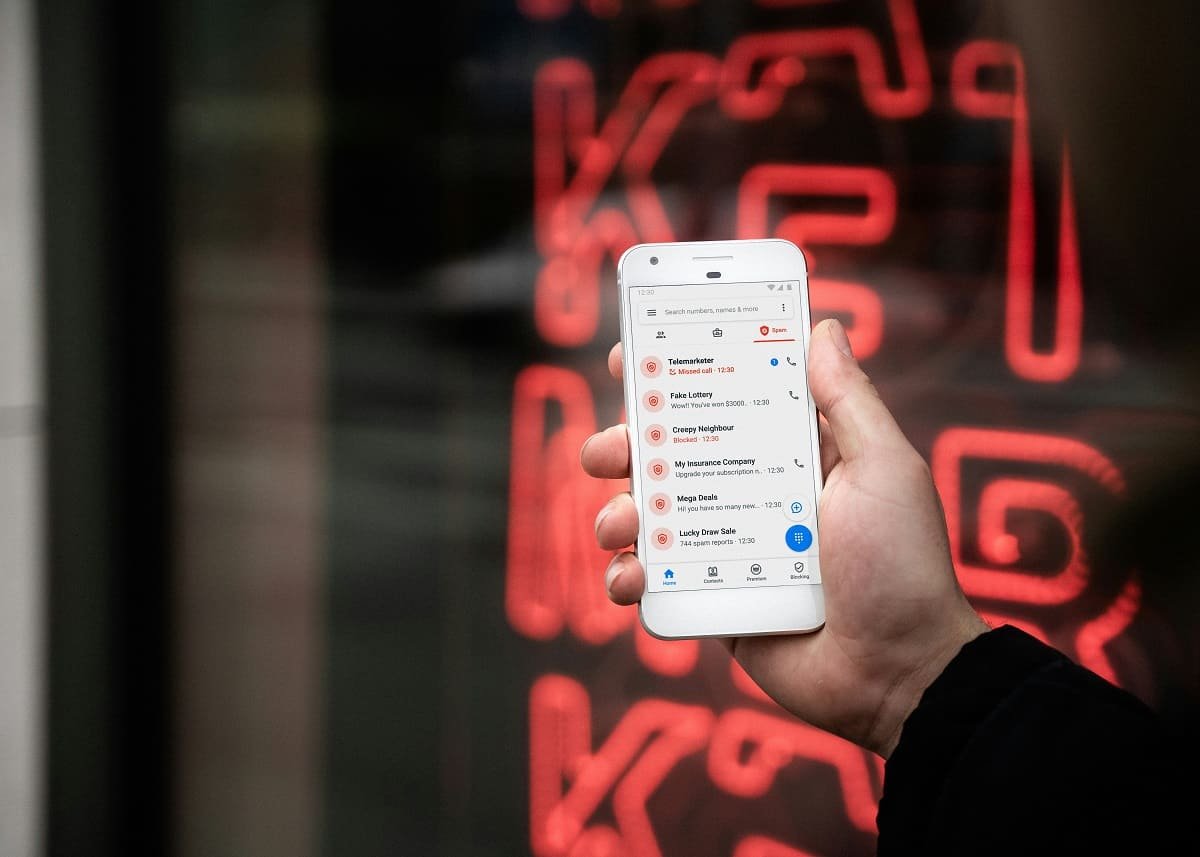
India’s telecom operators must roll out Calling Name Presentation on 4G and newer networks, displaying the caller’s registered name alongside the number for unsaved domestic calls without requiring users to activate the service.
The Department of Telecommunications (DoT) has directed telecom operators to introduce Calling Name Presentation (CNAP) across their service areas from 1 November 2026. Under the new requirement, incoming calls from unsaved domestic numbers will show the name recorded in the caller’s telecom subscriber records alongside the phone number.
The directive applies to access service providers, including Reliance Jio, Bharti Airtel, Vodafone Idea and state-owned Bharat Sanchar Nigam Limited (BSNL). The DoT issued the circular on 13 October, with the order reported publicly on 15 October. The initial rollout covers wireless networks using 4G and newer-generation technologies, following trials by operators.
CNAP is intended to make caller identification more informative without requiring users to install a third-party application. However, the name displayed will be based on telecom subscriber records and should not be treated as proof that a caller is genuine or that a call is safe.
How CNAP Will Work on Your Phone
The caller identification displayed on the recipient’s phone will have two fields: the telephone number and the caller’s name. If the number is already saved in the recipient’s contact list, the name saved on the phone will take precedence. For an unsaved domestic number, the name will be retrieved from the originating telecom operator’s subscriber records.
The service will be provided by default, without requiring subscribers to make a separate request. Operators will maintain databases linking subscriber names to telephone numbers, allowing the receiving network to obtain the relevant name when an incoming call arrives.
International calls will be displayed with the label “International Call” rather than a domestic subscriber name under the prescribed arrangement. Users who have activated Calling Line Identification Restriction (CLIR), in accordance with existing rules, will be exempt from name display.
The rollout is designed for modern mobile networks. The DoT has said that extending CNAP to 2G and 3G wireless networks and public switched telephone networks, including traditional landlines, will be considered separately after further examination.
DoT Sets Rules for Business and Bulk Connections
The circular provides a mechanism for eligible business and bulk-connection subscribers to display a preferred name instead of the name recorded in their standard subscriber database. This could help organisations show an identifiable business name when making customer-service or other legitimate calls.
The preferred name must meet the prescribed registration conditions. It can be a trademark registered with the Trade Marks Registry or a trade name registered on the Goods and Services Tax (GST) portal. Telecom operators must verify the supporting documents before approving the name for display.
For new connections, the preferred name and supporting documentation must be recorded as part of the customer application and subscriber data records. For existing connections, operators must establish a process through which customers can apply to update their preferred name, subject to verification.
The requirement does not mean every business can display any name it chooses. Approval depends on the applicable registration and verification rules, with the telecom operator responsible for checking the supporting evidence.
CNAP Includes Privacy and Security Requirements
The DoT has also prescribed safeguards for the handling of caller-name information. Operators must follow a security-by-design approach so that the name obtained through the query-response process is not retained after the call ends. The objective is to provide the information needed for caller identification while limiting unnecessary retention of caller identity data.
Operators must also establish a time-bound grievance redressal mechanism for complaints related to CNAP. This will be important when a subscriber’s registered name is incorrect, outdated or displayed in a way that causes confusion.
The directive follows the Telecom Regulatory Authority of India’s February 2024 recommendations on introducing CNAP in Indian telecom networks, as well as earlier DoT instructions concerning Know Your Customer (KYC) issues during implementation.
CNAP Is Different From Truecaller and Other Caller ID Apps
CNAP uses information recorded by the caller’s telecom provider, whereas third-party caller-identification applications may use their own databases, user contributions and other identification methods. The new service is intended to make a registered caller name available through the telecom network itself, reducing the need to rely exclusively on external applications to identify unknown numbers.
However, the registered name is not a guarantee of authenticity. A displayed name can help a recipient recognise a person or organisation, but it does not establish that the call is legitimate or rule out impersonation, account misuse or other fraud. Users should continue to be cautious about requests for OTPs, banking details, passwords or payments, even when a caller name appears on screen.
The feature should therefore be viewed as an additional layer of caller identification rather than a complete solution to spam and fraud. Its usefulness will depend on the accuracy of subscriber records, implementation across operators and how effectively users understand the limits of the displayed information.
What the November 1 Rollout Means for Consumers
From 1 November 2026, users on supported 4G and newer mobile networks should begin receiving calls with the registered names of unsaved domestic callers, subject to the prescribed exceptions and implementation. No separate activation request is required under the DoT’s direction.
The initial scope does not extend to 2G, 3G and landline networks, which will be considered separately. International calls will carry the “International Call” label, while subscribers using CLIR will not have their names displayed.
The change represents a network-level update to caller identification in India. It could make it easier for consumers to distinguish familiar callers from unknown numbers, but users will still need to assess calls carefully rather than treating the displayed name as a security verification.
