

TRAI’s August 2026 subscriber data shows Jio and Airtel driving more than 4.5 million of India’s 5.51 million net mobile additions, while 5G Fixed Wireless Access continues to expand faster month-on-month than the traditional wireline base.
India’s wireless base crosses 1.31 billion
India’s total wireless subscriber base increased from 1.306 billion at the end of July to 1.312 billion at the end of August, a monthly growth of 0.46%, according to the Telecom Regulatory Authority of India (TRAI). The regulator released the August subscription data on September 28.
The mobile-only subscriber base, excluding fixed wireless connections, rose 0.43% to 1.293 billion. Urban wireless subscriptions grew 0.70% during the month, considerably faster than the 0.13% increase in rural subscriptions.
Reliance Jio added 2.40 million mobile subscribers in August, taking its base to 508.43 million. Bharti Airtel added 2.11 million, reaching 491.60 million. Vodafone Idea gained 506,139 users, while BSNL added 492,831. MTNL lost 5,879 subscribers.
Jio ended August with a 39.31% mobile subscriber share, compared with 38.01% for Airtel, 15.43% for Vi and 7.24% for BSNL. The gap between Jio and Airtel stood at roughly 16.83 million subscribers.
Subscriber growth puts telecom stocks in focus
The latest TRAI numbers have also fed into market commentary around India’s listed telecom companies. Shares of Airtel and Vodafone Idea gained during trading on September 29 following the release of the August subscriber data, although the stock-market response should not be interpreted as being caused solely by the subscriber figures.
Nomura’s assessment, reported by The Economic Times, continues to factor subscriber growth alongside monetisation, premiumisation and the possibility of another industry tariff increase. The brokerage forecasts a 14% consolidated EBITDA CAGR for Bharti Airtel and Reliance Jio over FY26-FY29 and slightly higher EBITDA growth for Vi from a lower base, while also modelling a tariff increase of around 15% in Q3 FY27. These are analyst forecasts, not confirmed company guidance or TRAI projections.
The August subscriber figures therefore provide one operating datapoint for telecom models, but subscriber additions alone do not establish future revenue, ARPU or earnings outcomes.
5G FWA reaches 13.45 million connections
The other important signal from the August data is the continued expansion of Fixed Wireless Access.
TRAI reported 13.45 million 5G FWA connections at the end of August, up from 13.21 million in July. The segment added 245,209 connections during the month, representing 1.86% monthly growth.
Jio accounted for 9.42 million of the 5G FWA base, adding 148,870 connections. Airtel had 4.03 million and added 96,339. Interestingly, rural areas accounted for 6.98 million of the country’s 13.45 million 5G FWA connections, slightly more than the 6.47 million connections in urban areas.
Jio’s UBR-based FWA service added another 229,659 connections, taking its base to 5.37 million. That represented 4.47% monthly growth. Combining the 5G FWA and UBR categories gives roughly 18.82 million wireless fixed-access connections, although these are separate technologies and should not be treated as a single TRAI FWA category.
FWA is growing faster, but fibre remains larger
The August numbers show an important distinction in India’s broadband market.
Wireline subscribers increased from 48.01 million in July to 48.45 million in August, a gain of about 440,000 or 0.93%. By comparison, 5G FWA grew 1.86% during the month.
That means 5G FWA is currently growing at roughly twice the monthly rate of the wireline subscriber base. However, wireline remains substantially larger in absolute subscriber count: 48.45 million versus 13.45 million 5G FWA connections.
The data therefore points to increasing competition between fixed-access technologies rather than an outright replacement of fibre by FWA.
Jio added 187,797 wireline subscribers in August, while Airtel added 131,133. This suggests that operators are continuing to expand wired broadband even as their wireless fixed-access services grow.
Rural FWA expansion adds another dimension
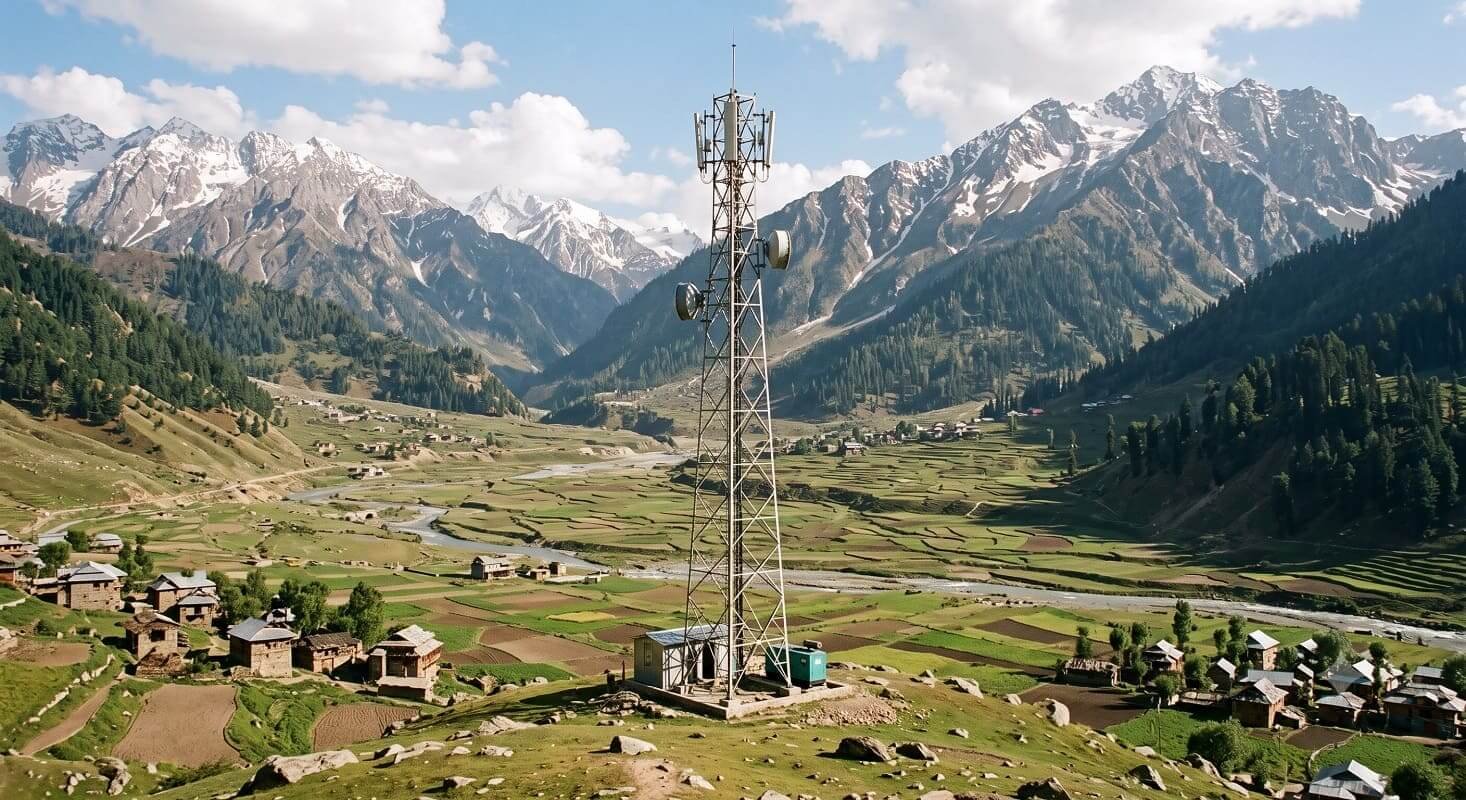
The rural share of 5G FWA is particularly notable. More than half of the 13.45 million 5G FWA connections were located in rural areas in August.
FWA can allow operators to deliver broadband without extending a physical last-mile connection to every premises. That makes the technology relevant in locations where laying fibre can be more difficult or slower, although TRAI’s subscriber data does not establish why individual customers selected FWA over wireline broadband.
For Jio and Airtel, the combination of mobile subscriber additions and FWA growth shows that the competition is increasingly extending beyond traditional mobile connectivity into the home broadband market.
What the August numbers mean
TRAI’s August data presents two parallel trends. Jio and Airtel continue to capture most of India’s monthly mobile subscriber additions, while wireless fixed broadband is expanding at a faster monthly rate than the traditional wireline subscriber base.
The next question for the market is how much of this subscriber growth can translate into higher revenue and ARPU as operators pursue premium services, 5G monetisation and home broadband. Analyst models are already incorporating these factors, but actual earnings will depend on tariffs, usage, customer mix and retention rather than subscriber additions alone.
For consumers, the FWA numbers point to a broader choice of home broadband technologies, particularly in areas where fibre availability remains limited. For operators, they highlight the growing importance of wireless broadband alongside the established mobile business.
